Yara Griffin · 10 October 2026
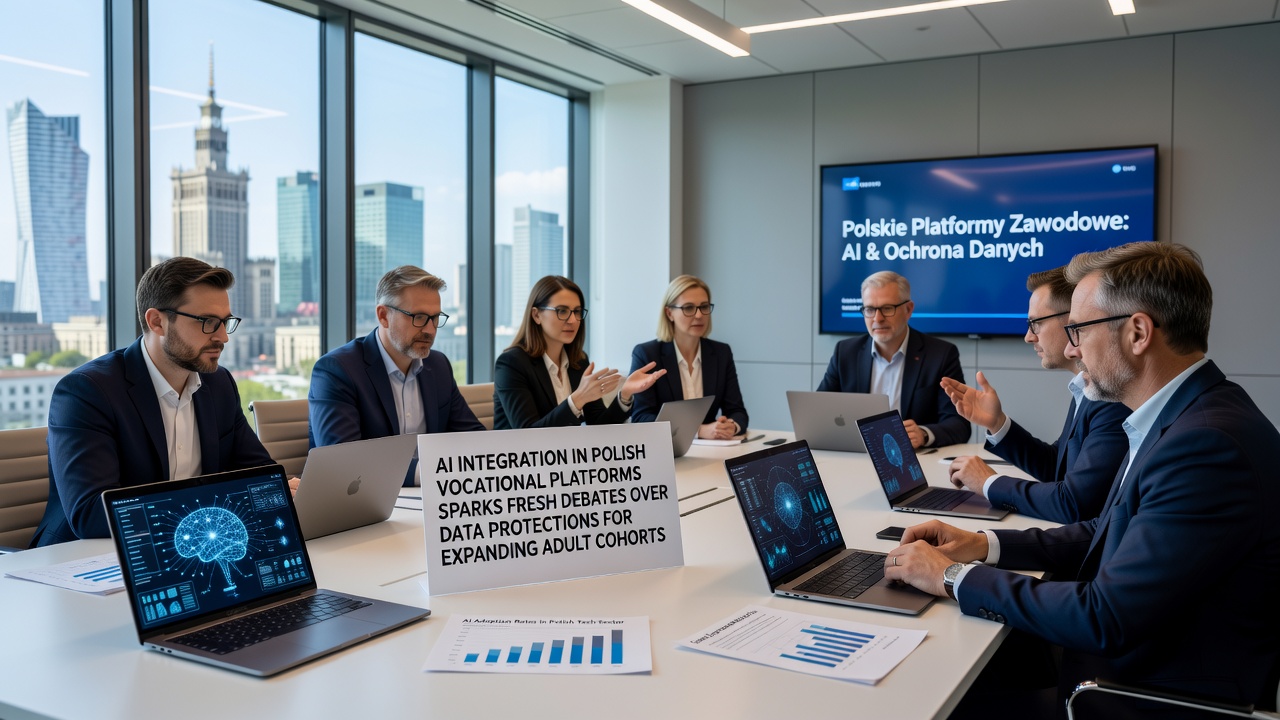
AI Integration in Polish Vocational Platforms Sparks Fresh Debates Over Data Protections for Expanding Adult Cohorts
Polish vocational training platforms have accelerated their adoption of artificial intelligence tools throughout 2025 and into October 2026, with systems now delivering personalized course recommendations, automated skill assessments, and adaptive content delivery for growing numbers of adult participants, while data protection frameworks face renewed scrutiny as enrollment figures climb.
Expansion of Adult Participation in Vocational Programs
Enrollment data from Poland's vocational education sector shows adult cohorts expanding steadily since 2023, driven by labor market shifts that require mid-career workers to update qualifications in fields such as manufacturing, logistics, and digital services, and platforms report that adults aged 30 to 55 now represent over 60 percent of active users on major systems. Researchers at institutions tracking lifelong learning note that this demographic brings distinct data profiles compared with younger students, including employment histories and prior certifications that AI algorithms process to generate tailored learning pathways.
Platforms integrate machine learning models that analyze interaction patterns, completion rates, and assessment results to adjust difficulty levels in real time, while administrators observe that these features help retain participants who balance training with full-time jobs. Figures released by the Polish Ministry of Education and Science indicate that adult vocational registrations rose 22 percent between 2024 and 2026, creating larger datasets that feed AI systems yet also raise questions about how personal information remains secured under existing rules.
AI Capabilities Deployed Across Platforms
Vocational providers deploy natural language processing to evaluate written assignments and chat-based tutoring modules that respond to learner queries, and these tools draw on aggregated user data to refine their accuracy over successive training cycles. One platform serving technical trades implemented predictive analytics that flag participants at risk of dropout based on engagement metrics, allowing instructors to intervene with targeted support materials before disengagement occurs.
Integration extends to administrative functions as well, where AI automates enrollment verification and credential matching against national qualification frameworks, reducing processing times for adult learners who frequently transfer credits from previous employers or institutions. Observers note that such efficiencies coincide with the rollout of the EU Artificial Intelligence Act requirements, which classify certain educational AI applications as high-risk and mandate transparency measures for data handling practices.

Data Protection Discussions Intensify
Debates center on the volume and sensitivity of information collected when AI processes adult learner profiles, since many participants share employment records, health-related accommodations, and performance histories that systems use to customize content. The General Data Protection Regulation continues to govern these activities, yet platform operators and regulators examine whether current consent mechanisms adequately address secondary uses such as model training or cross-border data transfers.
Stakeholders reference guidelines from the European Data Protection Board that clarify obligations for automated decision-making in educational contexts, and discussions in October 2026 highlighted the need for updated impact assessments as adult cohorts grow. A separate analysis from the OECD on adult learning data practices underscores how vocational platforms in member states, including Poland, manage expanding datasets while maintaining compliance.
Platform developers report implementing differential privacy techniques and on-device processing options to limit centralized data collection, and these measures respond to concerns that aggregated adult learner information could reveal patterns about workforce transitions across specific industries. Regulatory bodies conduct audits focused on whether AI vendors provide sufficient documentation of training data sources and algorithmic decision criteria.
Implementation Patterns and Oversight Measures
Multiple Polish platforms adopted federated learning approaches during 2025 that keep raw data on local servers while sharing only model updates, and this architecture supports collaboration among smaller vocational providers without pooling sensitive adult records. Training sessions for platform staff now incorporate modules on data minimization principles, ensuring that AI features request only the information necessary for personalization rather than broad profiles.
Industry associations track compliance rates and publish anonymized benchmarks that compare data handling across regions, allowing operators to identify gaps before regulatory reviews occur. In October 2026, technical workshops organized by vocational networks examined case examples where platforms adjusted AI configurations to meet stricter consent standards for adult participants who may share data across multiple training providers over time.
Conclusion
AI integration continues to reshape vocational platforms serving Poland's adult learners as enrollment expands, with data protection requirements evolving alongside technical capabilities through regulatory guidance and platform-level adjustments. Ongoing implementation of transparency tools and privacy-preserving methods reflects the sector's response to larger datasets and more sophisticated algorithms. Platforms maintain focus on aligning AI features with established legal frameworks while supporting the skill development needs of expanding adult cohorts.