Yara Hayes · 24 October 2026
Poland's Vocational Trainers Form Regional Alliances to Tackle Digital Skill Shortages in Niche Sectors
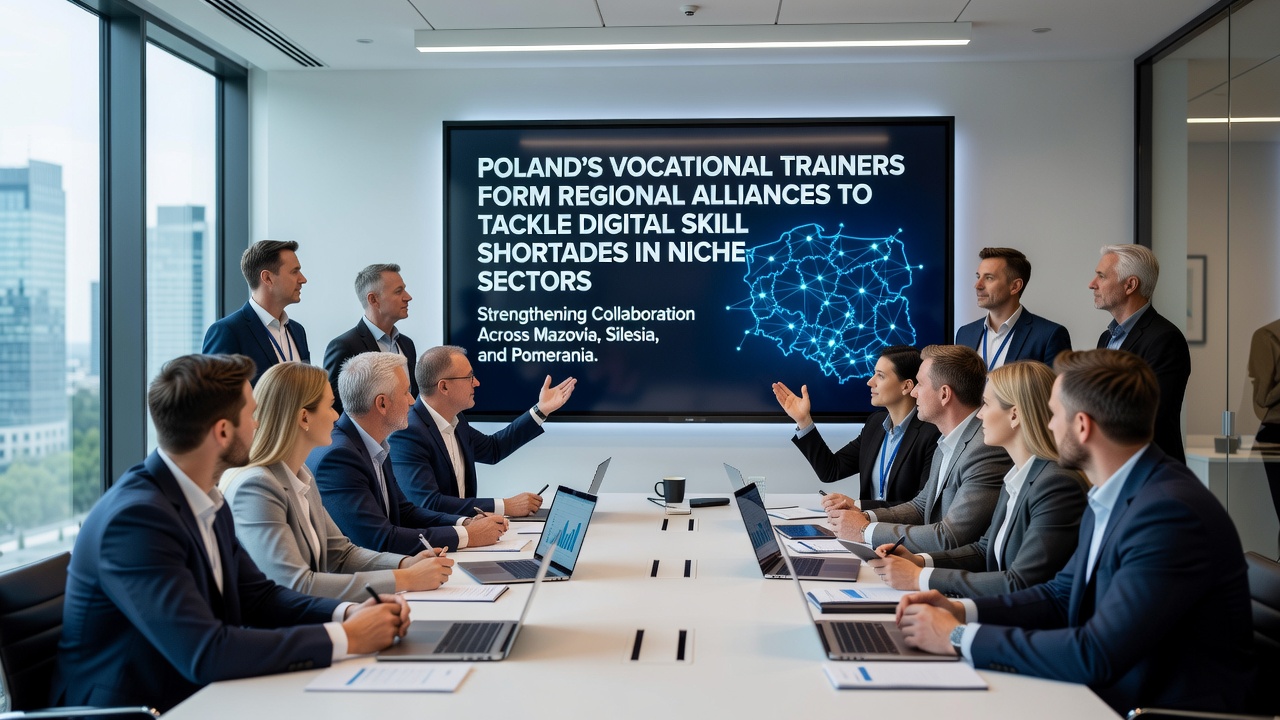
Regional groups of vocational trainers across Poland have started building structured alliances that focus on digital skill development in specialized industries, and these partnerships address gaps that individual organizations struggled to close on their own. Data from the Polish Ministry of Education and Science shows enrollment in niche vocational programs rose by 18 percent between 2024 and 2026, yet completion rates in areas such as precision manufacturing software and renewable energy diagnostics remained below 65 percent in many voivodeships. Trainers in the Małopolska and Śląsk regions signed the first formal alliance agreement in March 2026, and similar pacts followed in Wielkopolska and Pomorze by early summer.
Drivers Behind the Alliance Model
Shortages appear most acute in sectors that require both domain expertise and advanced digital competencies, including additive manufacturing, smart agriculture systems, and medical device calibration. The Central Statistical Office reported that job vacancies in these fields increased 27 percent year-over-year through the second quarter of 2026, while traditional training providers reported difficulty updating curricula at the same pace. Alliances allow smaller training centers to pool resources for shared digital laboratories, joint curriculum design, and coordinated applications for EU structural funds that single institutions often find too complex to manage alone.
Observers note that the model draws on earlier cooperation patterns established under the 2021-2027 National Recovery and Resilience Plan, yet the current alliances operate with greater autonomy and regional focus. In October 2026, representatives from twelve alliances met in Kraków to standardize data-sharing protocols for tracking learner outcomes across partner organizations, and preliminary figures indicate a 12 percent improvement in course persistence when participants move between allied providers.
Operational Structure and Resource Sharing
Each alliance maintains a rotating secretariat that handles administrative tasks, while technical working groups concentrate on specific digital tools such as simulation software for CNC programming or IoT platforms for logistics training. Partners contribute physical equipment on a scheduled rotation, and they negotiate bulk licensing agreements that reduce per-learner costs by an average of 34 percent according to internal alliance reports. One consortium in the Lublin region integrated a cloud-based assessment platform originally developed for automotive diagnostics, and trainers from six member organizations now use the same system to issue micro-credentials recognized by local employers.

Sector-Specific Initiatives
Renewable energy alliances concentrate on training for photovoltaic system monitoring and wind turbine predictive maintenance, areas where German and Danish equipment suppliers require certified digital skills that Polish programs previously lacked. A consortium linking trainers in Zachodniopomorskie with industry partners reported certifying 480 technicians in these competencies during the first nine months of 2026. In the medical technology niche, alliances in Mazowieckie focus on digital workflows for imaging equipment and sterilization tracking systems, and they coordinate with hospitals to provide supervised practicum placements that count toward qualification requirements.
Research coordinated by Cedefop indicates that collaborative delivery models of this type produce faster curriculum updates because feedback loops between trainers, employers, and learners operate at the regional level rather than through national channels. Cedefop publications document similar patterns in other member states, though Polish alliances emphasize smaller geographic footprints and tighter integration with local labor market data.
Measurement of Outcomes and Funding Mechanisms
Alliances track progress through shared dashboards that record enrollment, completion, and employment placement within six months of certification. Early returns from the 2026 cohort show placement rates averaging 71 percent in targeted occupations, compared with 58 percent for standalone programs operating in the same regions. Funding combines regional operational program grants, employer co-financing, and fees from learners who receive partial subsidies when referred through public employment services. The European Social Fund Plus component requires alliances to demonstrate cross-organizational mobility of at least 15 percent of participants, a condition that has prompted development of reciprocal recognition agreements for partial qualifications.
Conclusion
Regional alliances among Polish vocational trainers continue to expand their scope while maintaining focus on digital competencies required by niche sectors. Evidence collected through October 2026 shows measurable gains in resource efficiency, curriculum responsiveness, and learner progression when organizations operate under coordinated frameworks rather than in isolation. Continued monitoring by national statistical bodies and EU agencies will determine whether these arrangements scale effectively across additional voivodeships and occupational clusters.