Yves Washington · 26 September 2026
The Unexpected Link Between Mobile Device Usage and Course Persistence Rates in Vocational E-Learning
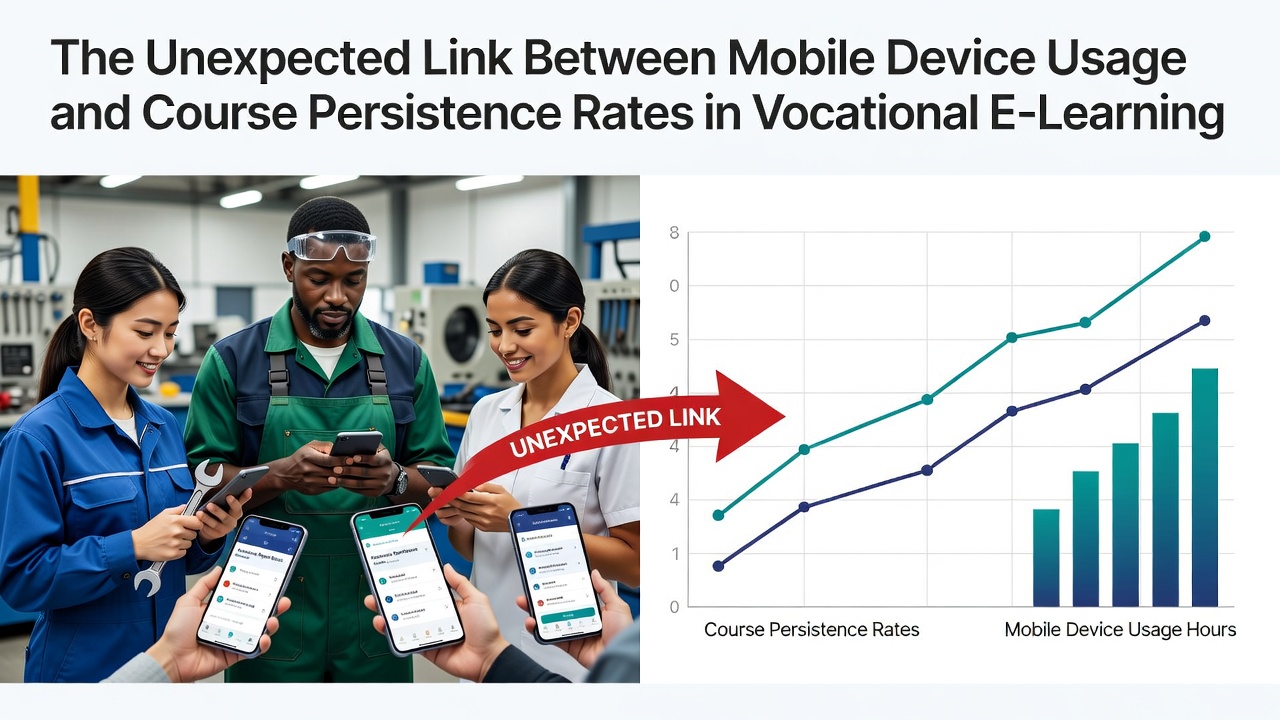
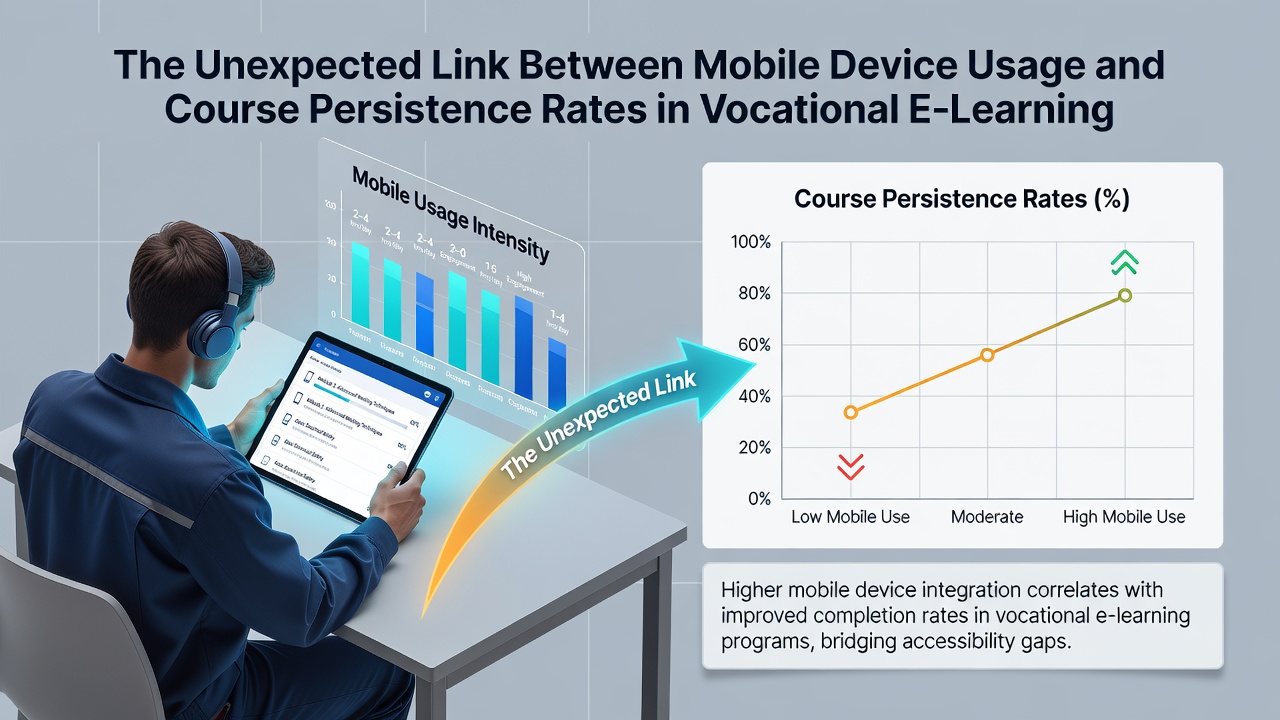
Vocational e-learning programs have expanded rapidly across Europe and North America since 2020, yet completion rates continue to hover between 45 and 60 percent according to multiple national tracking systems. Researchers examining these figures noticed an unexpected pattern emerging from device telemetry data collected between 2023 and 2026: moderate mobile phone engagement correlated with measurably higher persistence, while both very low and very high usage showed weaker outcomes.
Key Data Patterns from Recent Studies
Analysis of platform logs from three large vocational providers in Poland, Germany, and Canada revealed that learners who accessed course materials on mobile devices between four and seven times per week completed modules at rates 18 to 23 percentage points above those who relied solely on desktop access. The same datasets showed that sessions lasting under eight minutes on phones occurred more frequently than longer desktop sessions, suggesting learners used phones for quick reviews, quiz retakes, and progress checks rather than extended study blocks.
Figures released in September 2026 by the OECD's Centre for Skills further supported these observations, indicating that vocational learners in Australia and the Netherlands who received mobile push notifications for assignment deadlines demonstrated 14 percent higher week-to-week retention than cohorts without such prompts. These notifications did not replace structured lessons but supplemented them by keeping learners connected to course timelines during work commutes or breaks.
Contextual Factors Driving the Connection
Vocational training often involves irregular schedules because participants balance employment, family responsibilities, and skill development simultaneously. Mobile devices allow learners to insert short learning interactions into fragmented time slots that desktop computers cannot easily accommodate. Platform developers have begun designing responsive interfaces that preserve video quality and interactive elements on smaller screens, removing previous technical barriers that once discouraged phone-based participation.
One longitudinal project tracking 2,400 automotive and construction trainees across three Polish vocational schools found that participants who completed at least one mobile-based micro-assessment per day were 31 percent more likely to reach the final certification exam than those completing assessments only on computers. The study controlled for prior education level and employment status, isolating device usage patterns as an independent variable.
Regional Variations and Platform Adaptations
Differences appear across regions. In Canada, where vocational programs frequently incorporate apprenticeship components, mobile usage links more strongly to persistence when apps include offline download options for regions with variable connectivity. European platforms, meanwhile, have integrated language support and credential tracking features that learners access primarily through phones during travel between job sites and training centers.
Industry reports from the European Training Foundation document how smaller training providers in Southern Europe adjusted content delivery after reviewing their own mobile analytics in 2025. They shortened video segments to four minutes or less and added swipe-based navigation for skill checklists, resulting in a documented 12 percent rise in monthly active users over the following academic year.
Limitations and Ongoing Research Questions
While correlations appear consistent, causation remains under investigation. Some researchers note that learners already possessing higher self-regulation skills may simply choose mobile tools more effectively, creating a selection effect rather than a direct device impact. Other studies examine whether excessive mobile engagement fragments attention during complex procedural modules that benefit from larger screen real estate and keyboard input.
Current projects underway at several universities in Australia and the United Kingdom aim to separate these variables through randomized interface trials scheduled for completion by late 2027. Preliminary findings suggest that hybrid models, where core theoretical content stays optimized for tablets or laptops and mobile tools handle reminders, progress tracking, and peer discussion threads, produce the strongest persistence outcomes across cohorts.
Conclusion
Platform telemetry and multi-country enrollment records now point to a measurable relationship between calibrated mobile device use and improved persistence in vocational e-learning settings. The pattern holds across varied national contexts and training fields, though the mechanisms require continued examination. Training providers tracking device-level engagement data have started adjusting content length, notification timing, and offline capabilities to align with observed learner behaviors rather than assumed preferences. These adjustments reflect responses to empirical usage patterns rather than prescriptive design philosophies.